ONE CELL · ONE STITCH · ONE ROW
Knitting Graph Paper
Sketch a motif on cells shaped for your knitting gauge. Enter stitches across and rows tall over the same length; the chart keeps their proportions as you draw.
Default: 20 stitches / 28 rows per 10 cm · 5 mm chart columns · Demo gauge, not a tested swatch
Prefer a wider chart? Download a Letter landscape PDF or A4 landscape PDF. All four are blank vector charts with a 50 mm print check.
USE YOUR SWATCH
Make the grid match your stitch and row counts
The default numbers demonstrate the tool. Replace them with the gauge for your yarn, needles and stitch pattern. Counts must use the same measuring window: 10 cm or 4 in (exactly 101.6 mm).
Match your measured gauge
Enter both counts over this same length. Changing the window does not convert your counts.
4–80 stitches and 4–120 rows. Cell height / width must be 0.25–2. Use measured counts with up to one decimal place.
3–8 mm on paper. This changes drawing scale and how many whole cells fit, while the stitch / row proportion stays the same.
Custom downloads are loading. Ready-made PDFs above stay available.
At your entered gauge, that many stitches and rows would span about 18.0 × 19.3 cm of fabric. The screen preview is scaled to fit, not displayed at actual size.
WHY THE SHAPE CHANGES
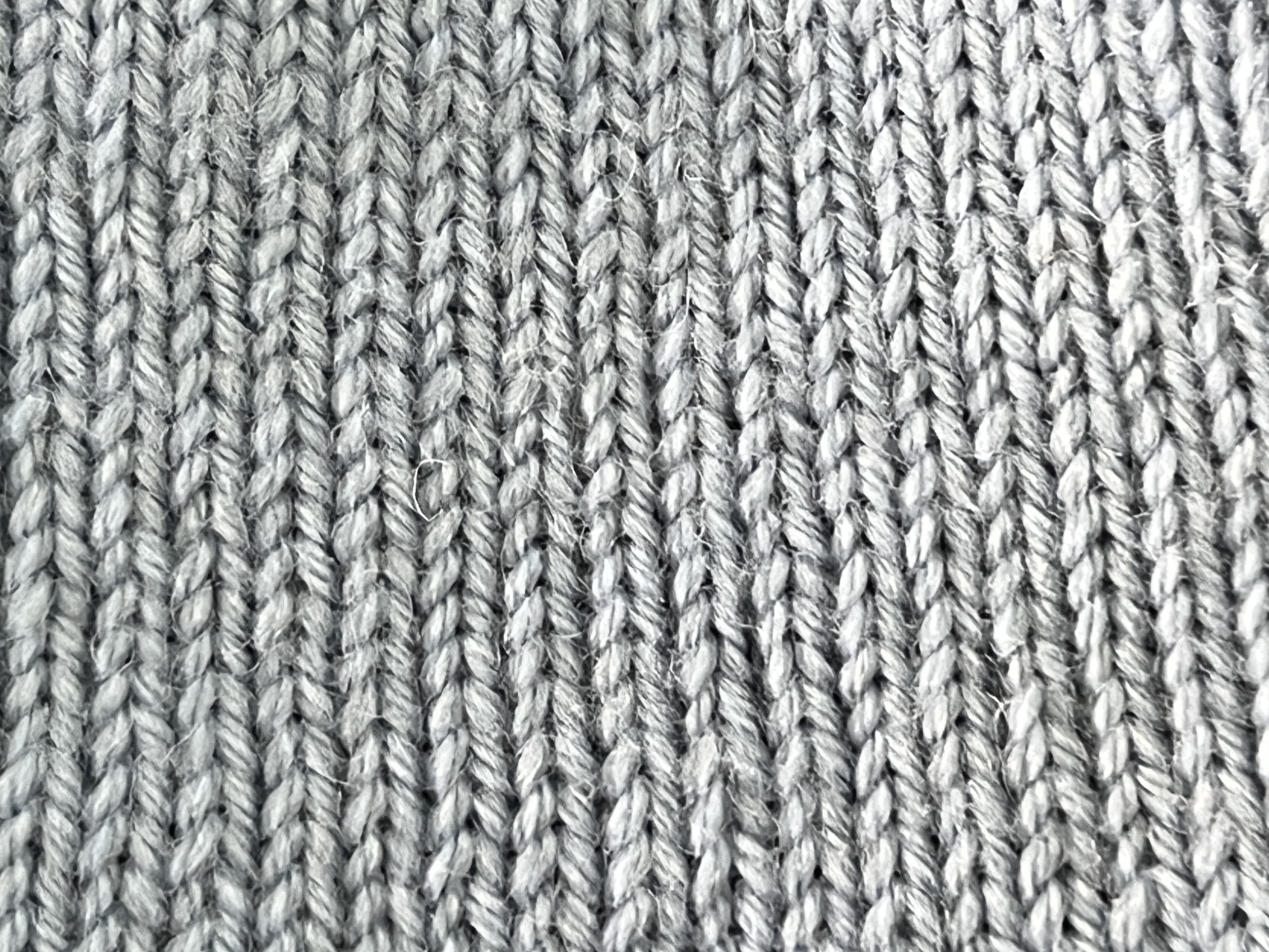
A stitch is not always a square
In a gauge of 20 stitches and 28 rows over the same length, each stitch is wider than each row is tall. For that example, cell height ÷ width is 20 ÷ 28 = 0.7143. If your measured counts give another ratio, your chart should use that ratio.

Measure first, then chart
- Make a representative swatch. Use the yarn, needles and stitch pattern for your project. Follow the pattern's instructions for washing or blocking before measuring.
- Choose one measuring window. Count stitches horizontally and rows vertically over the same length, away from distorted edges. Enter both counts under 10 cm or 4 in.
- Set the chart scale. Column width changes how large a cell prints, not the stitch / row ratio. Choose a larger cell for more drawing room or a smaller one for more cells per sheet.
- Draw one cell per stitch. Use color or symbols for your motif and keep a separate key. Sparse labels count stitches from the right and rows from the bottom.
The Craft Yarn Council guide to reading knitting instructions explains gauge with stitch and row counts and a 4-inch example. Our demo is explicitly entered per 10 cm; 4 inches and 10 cm are close, but are not equal.
Before you download
How is cell shape calculated?
If S stitches and R rows occupy the same measured length, one stitch is length ÷ S wide and one row is length ÷ R tall. Therefore cell height ÷ width = S ÷ R. The default 5 mm column is 5 × 20 ÷ 28 = 3.5714 mm tall.
Does every knitting chart need wide rectangles?
No. The correct proportions depend on your measured stitch and row counts. This tool can make cells shorter, square or taller within its supported ratio range. It does not infer a gauge from the photograph.
Why not use cross stitch or square graph paper?
Squares are useful for counting symbols and for cross stitch charts. A gauge-based knitting grid helps you judge a motif's proportions using the measurements you enter. You can also use ordinary graph paper when square cells suit your task.
Does the numbering tell me how to work each row?
No. Numbers increase from the lower-right corner, with labels thinned to stay readable. Follow your pattern for right-side and wrong-side reading direction, repeats, shaping and stitch instructions. This tool does not generate knitting instructions.
What is included in each file?
One blank page with proportional cells, stitch / row counts, heavy lines, sparse numbering, a 50 mm calibration bar and space to record yarn, needles and notes. Custom exports are PDF and vector SVG. The preview scales to your screen; use the PDF or SVG print settings to control physical size.